
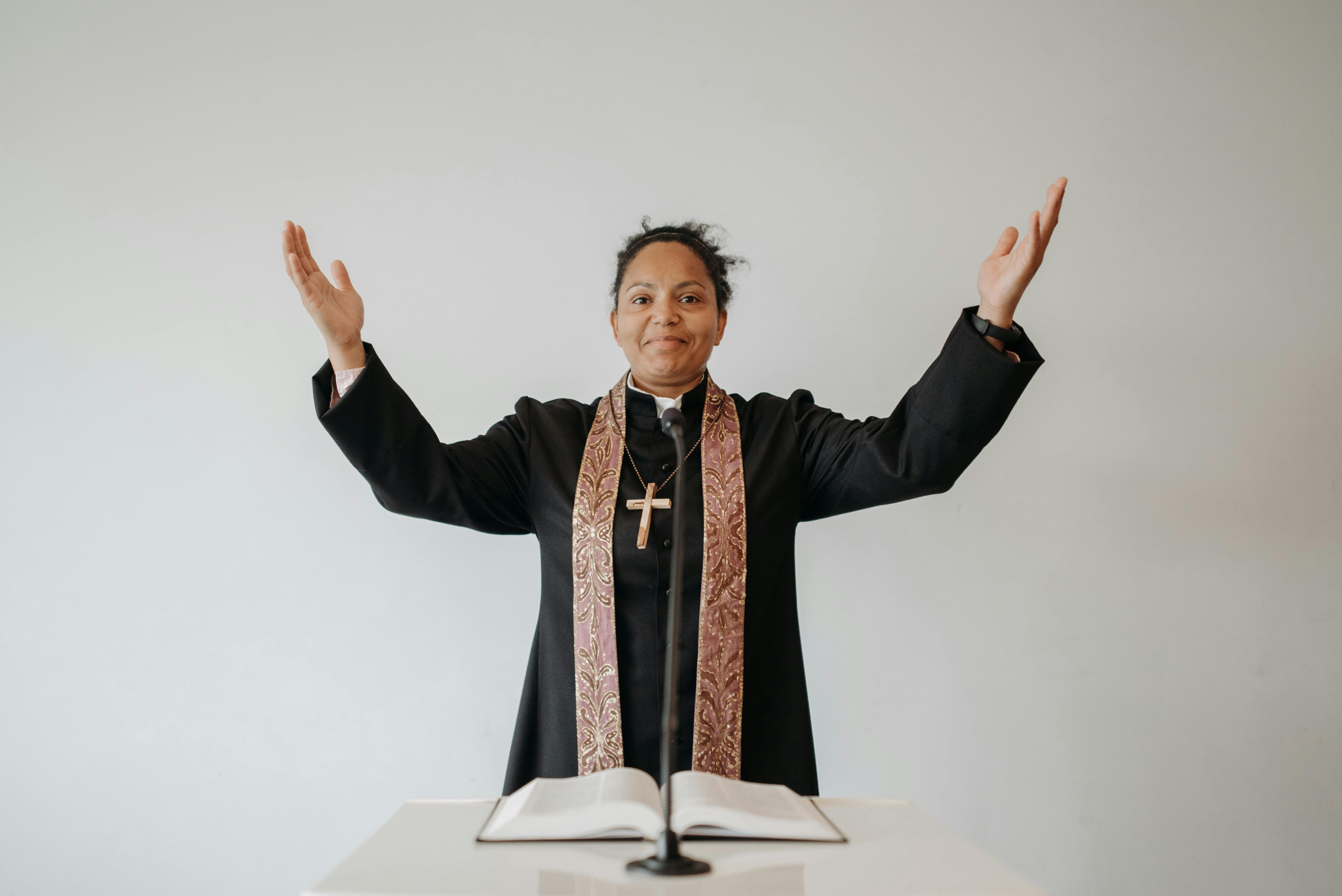
Women in Ministry
Few topics in modern church life stir as much discussion and sometimes division as the role of women in ministry. As culture continues to evolve and many churches reconsider traditional roles, Christians are left with an important and often delicate question: Can women preach or teach in the church? A recent teaching by Pastor Mike Signorelli, titled “The Truth About Women Preaching in Church Revealed,” sheds some light on this issue, offering a biblically anchored yet open-handed perspective that invites both reflection and unity. In this post, we will explore what Scripture truly teaches, looking not at isolated verses but at the overarching narrative of God’s Word.
The church in Ephesus, where Timothy pastored, was wrestling with false teaching and disorder. Many women at that time lacked access to formal theological training. Paul’s instruction might have been pastoral and protective, not prescriptive for all time. Understanding historical and cultural context is essential for interpreting Scripture accurately. We must look beyond isolated verses and allow the whole counsel of God’s Word to guide our understanding.
What Did Paul Actually Write?
At the heart of the debate surrounding women preaching is a verse from Paul’s letter to Timothy:
“I do not permit a woman to teach or to exercise authority over a man; rather, she is to remain quiet.” — 1 Timothy 2:12
For many, this verse appears to be a clear directive. Yet the question is not merely what Paul said, but why he said it, to whom, and under what circumstances. Was this instruction meant to be a universal command for all churches in all generations, or was it addressing a specific situation in the early church, perhaps one dealing with false teaching, lack of biblical training, or cultural disruption?
It’s crucial to remember that Paul did not write Scripture in a vacuum. He was a missionary, a pastor, and a mentor navigating the spiritual and cultural complexities of the early church. 1 Timothy 2 must be read in light of the whole Bible. Without context, any verse can become a blunt instrument, when in truth the Word of God is intended to be a sword of precision, “living and active, sharper than any two-edged sword” (Hebrews 4:12). Let us, therefore, be careful students of the Word, seeking not proof texts, but truth rightly divided.
Women Who Were Significant Leaders in Scripture
When we zoom out and examine the whole of Scripture, we discover a rich tapestry of women who served God in powerful and public ways. Deborah, for example, was not only a prophetess but also a judge, Israel’s highest political and military leader (Judges 4–5). Under her leadership, Israel experienced deliverance and peace. Her authority was not questioned; it was embraced.
In the New Testament, we find Priscilla, who, alongside her husband, Aquila, helped instruct Apollos, a gifted preacher, in deeper theological truth (Acts 18:26). Notably, Priscilla is often listed before her husband in the text, suggesting that she may have had a leading role in their ministry partnership.
We also meet Phoebe, described in Romans 16 as a deacon of the church in Cenchreae and a benefactor of many, including Paul himself. She is entrusted with delivering Paul’s letter to the Romans, a responsibility that indicates trust, authority, and significance. And then there is Junia, called “outstanding among the apostles” (Romans 16:7), a phrase that has sparked much scholarly discussion but nonetheless affirms her respected position in the early church.
These women didn’t serve quietly behind the scenes. They were leaders, thinkers, risk-takers, and servants of God. If Paul were completely opposed to women teaching or leading, these names and their stories would likely not be in our Bibles. Their stories serve as evidence that God does call women to teach, lead, and proclaim His truth.
What About Cultural Context?
To understand Paul’s words in letters like 1 Timothy, we must put ourselves in the shoes of the original audience. The early church was planted in a world where women were, by and large, denied formal education. Most were not taught to read or study Scripture, and many religious spaces excluded them entirely. In that light, Paul’s instruction to keep some women from teaching may not be a restriction rooted in gender but in preparation.
Consider this: Would we allow someone to teach in our churches today who was not biblically trained, spiritually mature, or submitted to church leadership? Probably not. Paul’s concern, then, may have been pastoral rather than patriarchal. He was shepherding a young church through turbulent times, seeking to protect the flock from error.
This doesn’t mean we discard Scripture as outdated. It means we interpret it wisely, understanding the difference between descriptive moments (what was happening then) and prescriptive commands (what we are called to do always). If cultural context helped shape Paul’s words, then spiritual discernment must shape how we apply them today.
Does the Holy Spirit Call Women to Preach Today?
Absolutely. Scripture affirms that spiritual gifts are given without gender distinction:
“In the last days, I will pour out my Spirit on all people. Your sons and daughters will prophesy…” — Joel 2:28 / Acts 2:17
In the New Testament church, what qualified someone for ministry wasn’t gender, but rather anointing, calling, and spiritual maturity. The same is true today. If a woman is gifted and called by God to preach, we must ask ourselves, who are we to stand in the way of God’s calling?
One of the most beautiful truths in Scripture is that God is not bound by human categories or societal norms. In Joel 2:28, the Lord declares, “I will pour out my Spirit on all people. Your sons and daughters will prophesy…” This promise is echoed and fulfilled in Acts 2 on the Day of Pentecost. The early church was born not through hierarchy, but through Holy Spirit empowerment, with men and women alike proclaiming the gospel with boldness.
In the body of Christ, gifts are not gendered; they are given by grace (Romans 12:6, 1 Corinthians 12:11). A woman with a gift for teaching, preaching, or shepherding should not be silenced simply because of her gender but encouraged to use her gifts for the building up of the church with humility, accountability, and excellence. The goal is never a platform for its own sake, but the edification of the body and the glory of Christ.
Let us remember Ephesians 4:11, which says Christ gave some to be apostles, prophets, evangelists, pastors, and teachers. Nowhere does the text restrict this list to men only. What matters most is calling, character, and fruit, not tradition alone.
A Call to Unity and Humility
As we wrestle with complex theological issues, we must keep the spirit of unity and love at the forefront. Too often, debates about women in ministry turn combative, dividing congregations and wounding hearts. This should not be so. Paul himself wrote in Galatians 3:28, “There is neither Jew nor Greek, slave nor free, male nor female, for you are all one in Christ Jesus.”
This does not erase our distinctions; rather, it reminds us that in Christ, we stand on equal footing at the foot of the cross. The church thrives not through rigid roles but through mutual honor and shared mission. Some churches may have different convictions on this issue, and that’s okay. What matters is that we do not elevate secondary issues above the primary mission of the church: to preach the gospel and make disciples of all nations.
Unity in the gospel doesn’t mean we all lead the same way; it means we all submit to the same Lord. Whether your church supports women preaching or is still exploring the issue, may we all agree on this: God’s Word is final, and His Spirit still speaks.
If God is calling a woman to proclaim His Word, let us not stand in the way. Instead, let us be a church that discerns with wisdom, prays with humility, and encourages every believer to live boldly for Christ.
Scripture First, Spirit-Led
The question of women preaching in church isn’t answered by one verse alone; it’s answered through the full counsel of God’s Word and the leading of the Holy Spirit. When we examine Scripture carefully, we find a God who empowers women, equips them, and calls them to stand alongside men in ministry.
We must not be afraid of complexity, nor should we settle for shallow answers. God’s truth is worth digging for. Let us be people of the Word, led by the Spirit, and marked by love. And above all, may we make room for every voice God chooses to use so that His name is glorified and His kingdom continues to advance.
In summary:
- The Bible includes women leaders, teachers, and preachers.
- Paul’s words in 1 Timothy must be understood in context.
- The Holy Spirit empowers both men and women for ministry.
- The church must remain unified, even amidst theological differences.
God is not limited by tradition. He is doing a new thing, even as He builds on the ancient truths of His Word. If a woman is preaching Christ faithfully, we should rejoice, not resist.
Closing Prayer
Heavenly Father,
We come before You with hearts open to Your Word and minds eager for Your truth. In the midst of questions, tensions, and traditions, we ask that You lead us, not by opinion or culture alone, but by the light of Your Spirit and the clarity of Your Scripture.
Thank You for the women and men You have called throughout history to proclaim Your name, teach Your truth, and serve Your people. Help us to honor the gifts You give, no matter who carries them. Give us the wisdom to discern Your voice above all others and the humility to submit to Your perfect will, even when it challenges our comfort or assumptions.
Lord, unify Your church. Let us not be divided by debate but drawn together in pursuit of Your kingdom. Raise up voices, both male and female, that speak with boldness, integrity, and compassion. Let the name of Jesus be lifted high through every surrendered heart and obedient servant.
May we be a generation that honors Your Word and follows Your Spirit.
In Jesus’ name we pray,
Amen.
If this post spoke to your heart or challenged your thinking, don’t keep it to yourself. Share it with someone you care about. Let’s start a conversation rooted in truth and grace.
Subscribe to our blog for more biblically grounded content on theology, church life, and Christian living.
Support efforts to help others grow in faith and imagine what church could be.