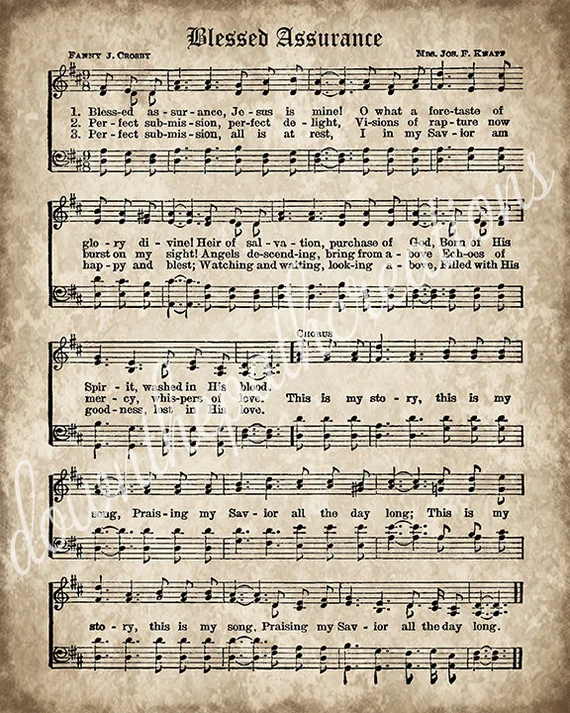
Blessed Assurance Meaning in the Bible
Blessed Assurance is more than a hymn—it is a declaration of confidence in salvation through Jesus Christ. Written by Fanny Crosby, this timeless song answers one of the most searched spiritual questions today: Can you know for sure that you are saved?
The Bible’s answer is clear: assurance is not only possible—it is promised.
The opening line does not hesitate: “Blessed assurance, Jesus is mine!”
That kind of certainty can feel almost foreign today. Many people live with a quiet spiritual uncertainty—hoping they are on the right path, but unsure if they have truly arrived. This hymn offers something different. It offers confidence rooted not in human effort but in divine promise.
In this article, you’ll discover:
- The meaning of Blessed Assurance
- Key Bible verses about assurance of salvation
- How the hymn reflects biblical truth
- Practical steps to live with confidence in Christ
What Is Blessed Assurance?
Blessed Assurance means having complete confidence that you are saved through Jesus Christ, based on God’s promises—not your performance. The Bible teaches that believers can know they have eternal life (1 John 5:13 NIV), making assurance a central part of Christian faith.
At its heart, blessed assurance means having a settled confidence that your salvation is secure in Jesus Christ. It is not wishful thinking. It is not blind optimism. It is confidence grounded in what God has said.
The apostle John writes with clarity:
1 John 5:13 (NIV): “I write these things to you who believe in the name of the Son of God so that you may know that you have eternal life.”
Notice that word: know. Not hope. Not assume. Not guess.
This assurance is not something we manufacture through effort or emotion. It is something confirmed within us:
Romans 8:16 (NIV): “The Spirit himself testifies with our spirit that we are God’s children.”
This means assurance is both theological and personal. It is the truth we understand and a reality we experience.
There is a kind of quiet shift that happens when this truth takes hold. One man described it this way: after years of trying to prove himself to God, he realized he was being invited to trust what God had already declared. That realization did not remove every question from his life, but it gave him a foundation strong enough to hold them.
Blessed Assurance Hymn Explained Line by Line
“Heir of Salvation”: Understanding Your Identity in Christ
The hymn continues, “Heir of salvation, purchase of God,” and with that line, it moves from assurance to identity.
Scripture describes believers in striking terms:
Ephesians 1:7 (NIV) “In him we have redemption through his blood, the forgiveness of sins, in accordance with the riches of God’s grace.”
And again:
Romans 8:17 (NIV) “Now if we are children, then we are heirs—heirs of God and co-heirs with Christ…”
To be an heir means that your future is secure because of your relationship, not your performance. You are included, not because you earned a place, but because you were given one.
A woman once shared how this truth reshaped her life. For years, she had approached faith like a performance review—constantly evaluating whether she had done enough to be accepted. But when she began to understand that her identity in Christ was not something she achieved but something she received, her entire perspective changed. She did not become careless; she became free.
“Assurance grows by repeated proof of God’s grace.” Over time, as believers see God’s faithfulness, their confidence deepens.
—Charles Spurgeon
Over time, as believers see God’s faithfulness, their confidence deepens.
“Born of His Spirit”: The Transformation of Salvation
“Born of His Spirit, washed in His blood” captures the transforming nature of salvation.
The apostle Paul writes:
Titus 3:5 (NIV) “He saved us through the washing of rebirth and renewal by the Holy Spirit.”
And John adds:
1 John 1:7 (NIV) “The blood of Jesus, his Son, purifies us from all sin.”
These verses point to two realities: inward renewal and complete cleansing. Salvation is not simply about forgiveness; it is about transformation.
Consider the experience of a man who spent years battling destructive habits. He described his turning point not as a moment of sudden perfection, but as a shift in identity. “I stopped seeing myself as someone trying to change,” he said, “and started seeing myself as someone who had been changed.” That shift did not eliminate struggle, but it gave him a new direction.
“The true believer is one who has not only at peace with God but also the peace of God.”
—D. L. Moody
Transformation does not mean the absence of difficulty; it means the presence of a new life within it.
“This Is My Story”: Why Your Testimony Matters
“This is my story, this is my song” shifts the focus from doctrine to personal experience.
Scripture encourages believers:
Psalm 107:2 (NIV) “Let the redeemed of the Lord tell their story—those he redeemed from the hand of the foe.”
Every believer has a story worth telling. Not because it is dramatic, but because it is real.
There is a tendency to assume that only extraordinary stories matter. But often, it is the quiet, steady stories that resonate most deeply. A young professional once described her faith journey as a series of small, consistent choices—choosing integrity, choosing forgiveness, choosing trust. There was no single defining moment, but there was a clear direction. “It wasn’t dramatic,” she said, “but it was real.”
“God has given us two hands, one to receive with and the other to give with.”
—Billy Graham
Sharing our story is one of the ways we give.
“Perfect Submission, All Is at Rest”: Living in Peace
The hymn concludes this section with a powerful image of rest: “Perfect submission, all is at rest.”
This kind of rest is not passive; it is rooted in trust.
The prophet Isaiah writes:
Isaiah 26:3 (NIV) “You will keep in perfect peace those whose minds are steadfast, because they trust in you.”
And Jesus offers this invitation:
Matthew 11:28 (NIV) “Come to me, all you who are weary and burdened, and I will give you rest.”
This is not a promise of an easy life. It is a promise of a steady heart.
A business owner once shared how his sense of identity had become tied entirely to his success. When things went well, he felt secure. When they did not, he felt undone. Over time, his faith began to reshape that pattern. He realized he had been asking his work to provide what only God could give. That realization did not change his responsibilities, but it changed the weight he carried.
“Peace is not the absence of trouble, but the presence of Christ.”
—Sheila Walsh
How to Know You Are Saved According to Scripture
For many people, assurance sounds beautiful in theory but feels distant in practice. The good news is that Scripture does not leave us guessing. It provides clear direction—not as a checklist to earn salvation, but as a pathway to live confidently in what God has already promised.
For those seeking this kind of assurance, Scripture provides clear guidance.
- Believe in Jesus Christ
John 3:16 (NIV) “For God so loved the world that he gave his one and only Son, that whoever believes in him shall not perish but have eternal life.”
Belief, in the biblical sense, is more than intellectual agreement. It is trust. It is the decision to rely on Jesus, not just admire Him.
A college student once described his struggle this way: he had grown up hearing about Jesus, could explain the gospel clearly, and even agreed with it intellectually. But when life became uncertain, he realized he was still relying primarily on himself—his plans, his discipline, his control. Belief became real for him when he consciously shifted his trust. Instead of asking, “Do I understand this?” he began asking, “Am I depending on this?”
In everyday life, this might look like choosing to trust Christ when your future feels unclear—when career plans fall through, when relationships disappoint, or when life doesn’t follow your expectations. Belief is not proven in comfort; it is revealed in uncertainty.
- Trust God’s Promises Over Your Feelings
Hebrews 10:23 (NIV) “Let us hold unswervingly to the hope we profess, for he who promised is faithful.”
In everyday life, this might look like choosing to trust Christ when your future feels unclear—when career plans fall through, when relationships disappoint, or when life doesn’t follow your expectations. Belief is not proven in comfort; it is revealed in uncertainty.
Feelings are powerful, but they are not always reliable. There will be days when you feel close to God and days when you feel distant. Assurance is not built on emotional consistency; it is built on God’s unchanging character.
A young mother once shared how this played out in her life. Between sleepless nights, constant responsibilities, and emotional exhaustion, she often felt spiritually dry. “If I judged my faith by how I felt,” she said, “I would assume I was failing.” But instead, she began anchoring herself in what she knew to be true. She would read Scripture even when it felt routine, pray even when her words felt simple, and remind herself that God’s presence did not depend on her emotional state.
Trusting God’s promises in real life means choosing truth over mood. It means reminding yourself, especially on difficult days, that God’s faithfulness does not fluctuate with your feelings.
- Listen to the Holy Spirit’s Witness
Romans 8:16 (NIV) “The Spirit himself testifies with our spirit that we are God’s children.”
The Holy Spirit’s work is often quieter than we expect. It is less about dramatic moments and more about consistent inner conviction and guidance.
A man navigating a difficult ethical decision at work described sensing a persistent inner prompting to choose integrity, even though it might cost him professionally. “It wasn’t loud,” he said, “but it was clear.” That inner conviction aligned with Scripture, and following it strengthened not only his character but also his confidence that God was actively at work in his life.
Listening to the Holy Spirit in everyday life means paying attention to those moments of conviction, guidance, and clarity that align with God’s Word. It is choosing to respond when you sense the nudge to forgive, to act honestly, or to step out in faith.
Over time, responding to that inner witness builds assurance. You begin to recognize that your faith is not self-generated—it is Spirit-led.
- Grow in God’s Word Daily
Romans 10:17 (NIV) “Consequently, faith comes from hearing the message, and the message is heard through the word about Christ.”
Faith does not grow in isolation. It grows through consistent exposure to truth.
A busy professional once admitted that for years, he treated Scripture as something optional—something he would engage with when he had extra time. The result was a faith that felt shallow and inconsistent. Eventually, he made a simple but significant change: he set aside ten minutes each morning to read and reflect on Scripture. “It didn’t feel dramatic,” he said, “but over time, it changed how I think, how I respond, and how I see God.”
Growing in God’s Word does not require hours of study to be effective. It requires consistency. It might look like reading a passage during your morning coffee, listening to Scripture during your commute, or reflecting on a single verse throughout the day.
The key is not volume; it is regularity. Over time, God’s Word reshapes how you think—and as your thinking changes, your assurance deepens.
- Live Out Your Faith with Confidence
Assurance is strengthened through action. Not because actions earn salvation, but because living out your faith reinforces what you believe.
A teacher once shared how she struggled with fear of speaking openly about her faith. She worried about how others might respond or whether she would say the wrong thing. But over time, she began taking small steps—mentioning her faith in conversations, offering to pray for a colleague, or simply living in a way that reflected her values. “Each step was small,” she said, “but each one made my faith feel more real.”
Living by faith in everyday life might look like:
- Choosing integrity when dishonesty would be easier
- Extending forgiveness when resentment feels justified
- Trusting God’s provision when finances are tight
- Speaking truth with kindness in difficult conversations
As faith moves from belief to action, assurance becomes more tangible. It is no longer just something you think—it becomes something you experience.
Bringing It All Together
These steps are not a formula for earning assurance; they are a framework for living in it. Each one reinforces the others:
- Belief establishes the foundation
- Trust stabilizes the heart
- The Spirit confirms the relationship
- Scripture strengthens understanding
- Action makes faith visible
2 Corinthians 5:7 (NIV) “For we live by faith, not by sight.”
Over time, what once felt uncertain becomes steady. Not because life becomes easier, but because your foundation becomes stronger.
A Song That Becomes Your Life
“Blessed Assurance” endures because it gives voice to something deeply needed—the confidence that we are known, secure, and at peace with God.
The apostle Paul writes:
Romans 8:1 (NIV) “Therefore, there is now no condemnation for those who are in Christ Jesus.”
No condemnation. Not less. None.
This is the foundation of assurance. And when this truth takes hold, it does not lead to arrogance. It leads to steadiness. A quiet confidence that shapes how a person lives, speaks, and hopes.
The hymn is not merely meant to be sung. It is meant to be lived.
And that is where the words of the hymn begin to move from poetry to reality:
Blessed assurance, Jesus is mine.
Final Reflection
Before you move on, consider this:
Are you living with uncertainty… or with assurance?
If this message helped you understand the meaning of Blessed Assurance, share it with someone who needs encouragement—and take a moment to reflect on where your confidence truly rests.
Frequently Asked Questions About Blessed Assurance
Can you have assurance of salvation?
Yes. The Bible teaches that believers can know they are saved through faith in Jesus Christ (1 John 5:13 NIV).
What does Blessed Assurance mean in the hymn?
It means having confidence that Jesus has saved you and that your eternal future is secure.
Is assurance based on feelings or faith?
Assurance is based on faith in God’s promises, not emotions.
Closing Prayer
Heavenly Father,
Thank You for the gift of assurance—the quiet, steady confidence that we belong to You. In a world that often feels uncertain, You have given us something firm to stand on: Your promises, Your presence, and Your grace.
Lord, for those who read this and feel confident in their faith, deepen that assurance. Let it not become complacency, but a source of peace, gratitude, and steady trust. Help them to live in a way that reflects the truth they believe—that they are known, loved, and secure in You.
For those who are struggling with doubt, meet them gently. Remind them that assurance is not something they must manufacture, but something You are willing to give. Quiet the noise of fear and replace it with the truth of Your Word. Help them to trust You, even when their feelings are uncertain.
Teach us all to rest in what You have already done through Jesus Christ. When we are tempted to measure our standing by our performance, redirect our hearts to the finished work of the cross. When we feel unsteady, anchor us again in Your faithfulness.
Holy Spirit, continue to guide us, to convict us, and to remind us that we are Your children. Shape our lives so that our faith is not only something we say, but something we live.
May the truth of “Blessed Assurance” move beyond words on a page and become a reality in our daily lives—steady, quiet, and unshaken.
We thank You, we trust You, and we rest in You.
In Jesus’ name,
Amen.
If this post spoke to your heart or challenged your thinking, don’t keep it to yourself. Share it with someone you care about. Let’s start a conversation rooted in truth and grace.
Subscribe to our blog for more biblically grounded content on theology, church life, and Christian living.
Support efforts to help others grow in faith and imagine what church could be.
Scripture Copyright Notice
Scripture quotations taken from the New International Version.
Copyright © 1973, 1978, 1984, 2011 by Biblica, Inc.™
Used by permission. All rights reserved worldwide.
Share this post: on Twitter on Facebook